

|
Executive Summary
|
Your business may represent decades of work and much of your family’s wealth. When legal questions arise, your attorney may need a detailed understanding of the company’s finances.
That could involve reviewing financial statements, examining ownership interests, or determining how a valuation affects your legal position. Sometimes, your attorney needs an accountant or valuation professional to help interpret that information.
But sharing sensitive financial records with a third party can raise confidentiality concerns. Ordinarily, communications with an accountant are not protected by attorney-client privilege.
A Kovel Agreement may help protect certain communications when your attorney needs financial assistance to provide legal advice. But that protection has limits, and the arrangement should be established before sensitive information is shared.
What Is a Kovel Agreement?
A Kovel Agreement is a written arrangement in which an attorney engages an accountant or other professional to help the attorney provide legal advice to a client.
The concept comes from United States v. Kovel, 296 F.2d 918 (2d Cir. 1961). In that case, the court recognized that attorney-client privilege may extend to certain communications involving an accountant assisting an attorney.
The court compared the accountant’s role to that of an interpreter. Just as a translator may help a lawyer understand a client who speaks a foreign language, an accountant may help a lawyer understand complex financial information.
However, hiring an accountant or other professional through an attorney does not automatically make the accountant’s work privileged. The purpose of the engagement and the nature of the communications are critical.
How Does Kovel Privilege Work?
Kovel does not create a separate privilege. Instead, attorney-client privilege may extend to qualifying communications with a professional who assists your attorney in providing legal advice.
Under California Evidence Code §952, confidential attorney-client communications may include communications involving third parties whose participation is reasonably necessary to accomplish the purpose of the legal consultation. This may include an accountant or valuation professional assisting the attorney, but it does not automatically protect ordinary financial or accounting services.
For Kovel privilege to potentially apply, the communications generally must be:
- Confidential
- Made for the purpose of obtaining legal advice from the attorney
- Necessary for the attorney to understand the client’s situation
- Part of an engagement directed by the attorney, not the client’s routine business needs
Federal law also recognizes a separate privilege for certain communications with federally authorized tax practitioners under IRC §7525. However, that privilege generally does not apply in criminal tax matters. This is one reason attorneys may rely on Kovel arrangements when a tax issue carries potential criminal exposure.
What Is a Kovel Accountant?
A Kovel accountant works under an arrangement directed by your attorney to assist with legal representation. The professional’s actual role, not simply who signs the engagement, determines whether privilege may apply.
In practice, the arrangement is usually structured so that:
- The law firm retains the accountant under a written engagement
- The accountant works at the attorney’s direction
- Findings and communications are directed to the attorney
- The accountant’s work supports the attorney’s legal advice
Many attorneys prefer to engage an accountant who did not prepare the client’s tax returns or financial statements. Work performed before the Kovel engagement, such as routine return preparation, generally does not become privileged after the fact.
When Should Business Owners Consider a Kovel Agreement?
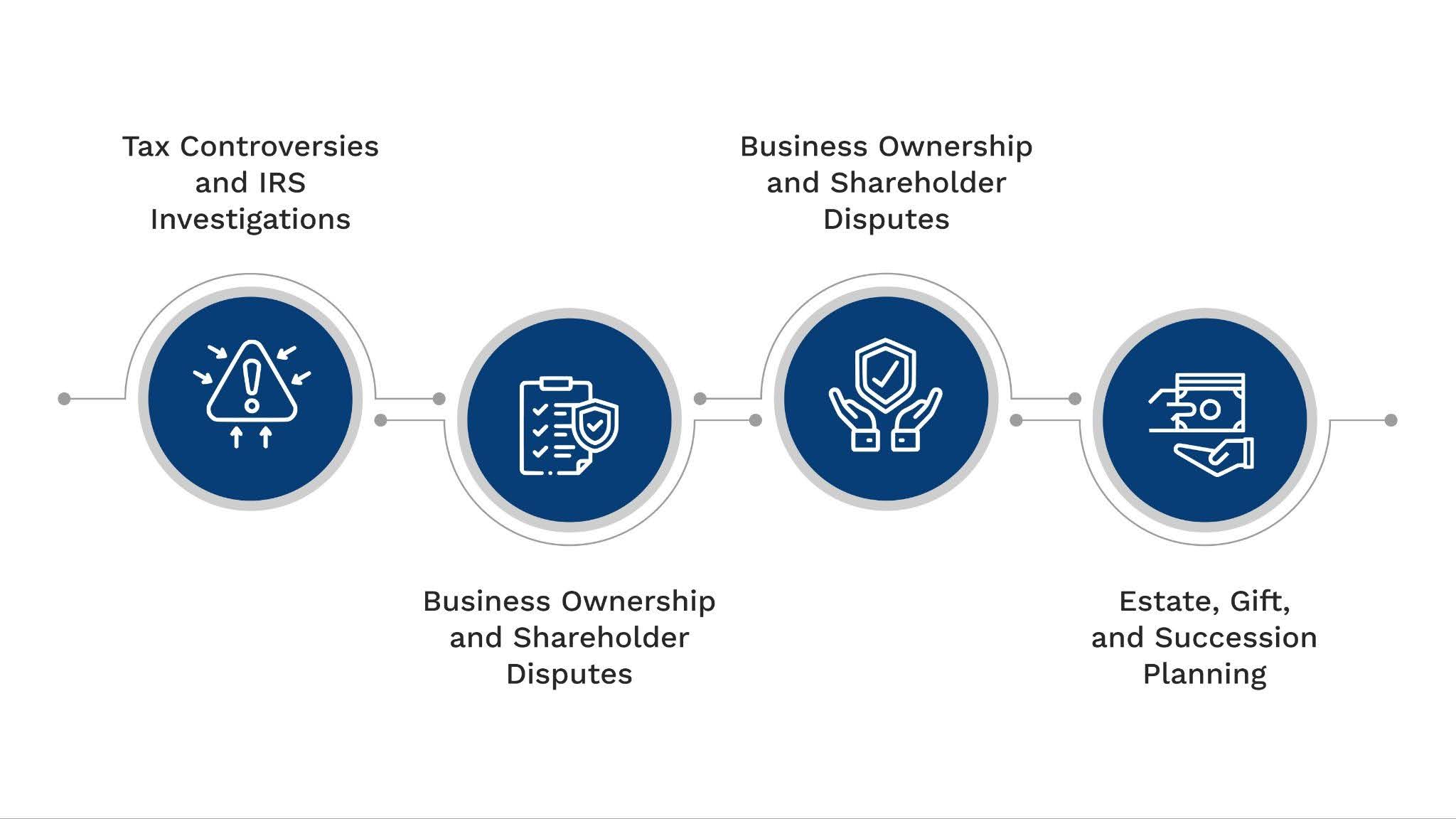
Business owners frequently need financial, accounting, and other professionals during legal planning. A Kovel arrangement may be appropriate when the professional helps your attorney interpret financial information needed for legal representation. Common situations include the following:
Tax Controversies and IRS Investigations
During an IRS audit, examination, or investigation, your attorney may need help analyzing financial records, reconstructing transactions, or understanding prior filings.
A Kovel accountant may assist with that analysis while communications are directed to counsel. This can be especially important when a tax matter has potential criminal implications, where the tax practitioner privilege generally does not apply.
Kovel planning often works best as part of a broader strategic income tax planning approach, rather than as a reaction after a problem develops.
Business Ownership and Shareholder Disputes
Ownership disputes often turn on financial questions. These may include how profits were distributed, how capital accounts were maintained, or what an ownership interest is worth.
Your attorney may need a financial professional to evaluate these issues before advising you on your legal position. Litigation involving financial records can raise similar needs.
Business Valuations and Ownership Transfers
Valuation professionals often work with business owners during significant transactions. Their assessments may consider earnings, company assets, ownership restrictions, projected growth, and market conditions.
For a privately held business that represents most of an owner’s net worth, valuation assumptions can affect substantial financial decisions. A valuation may influence:
- Shareholder litigation
- Ownership transfers among family members
- Buy-Sell Agreements
- Business succession decisions
- Estate and gift tax planning
In some situations, your attorney needs a valuation professional to explain financial information before offering legal advice. Certain confidential communications made for that purpose may qualify for Kovel privilege.
However, the valuation itself is not automatically protected. A report intended for lenders, buyers, tax filings, or other third parties may require disclosure. The intended use should be established before work begins.
Estate, Gift, and Succession Planning
For high-net-worth business owners, financial and legal decisions often overlap. Real estate holdings, investment entities, and family trusts may add further considerations.
When financial analysis helps your attorney provide confidential advice on transferring ownership or structuring a trust, you may want to discuss a Kovel arrangement. For business owners, this planning may affect the value of ownership interests, future transfers, and the family’s long-term financial position.
When a Kovel Agreement May Not Help
Ordinary accounting, tax preparation, and valuation services generally do not become privileged simply because an attorney arranges them. The objective of a Kovel engagement is not to conceal financial information. It supports legal advice while preserving confidentiality where the law permits.
What Should a Kovel Agreement Include?
A written Kovel Agreement should clearly establish the professional’s role. Common provisions address:
|
Provision |
What It Should Address |
|
Purpose of the engagement |
The legal advice that requires financial assistance |
|
Professional responsibilities |
The specific accounting or valuation work involved |
|
Attorney direction |
How the professional assists and reports to legal counsel |
|
Confidentiality |
How sensitive records and communications are protected |
|
Information sharing |
How reports, findings, and work papers will be handled |
The agreement should reflect the work actually performed. Courts may examine the substance of the relationship rather than rely on the document’s title.
Does a Kovel Agreement Guarantee Attorney-Client Privilege?
No. Privilege depends on the applicable law, the purpose of the communications, and the professional’s actual role.
Kovel is a federal appellate decision from the Second Circuit. California and federal proceedings may apply different privilege rules, so the analysis can vary depending on where an issue arises.
Kovel privilege may be weakened or lost when:
- Communications concern routine business or accounting services
- The professional primarily serves the client rather than the attorney
- Information is shared with outside parties, such as lenders or buyers
- A report is prepared for filing or third-party use
- The engagement is set up after the work has already been performed
Business owners should discuss these limitations with counsel before sharing sensitive information.
Build a Legal and Tax Strategy That Protects Sensitive Business Information

Financial records can play a central role in business disputes, tax investigations, and ownership transfers. When those records are needed for legal advice, the way financial professionals are engaged deserves careful attention.
At Dahl Law Group, we coordinate legal and tax planning through our Strategic Planning Counsel for Business Owners® approach. Our goal is to help business owners protect sensitive information while making informed decisions about their companies and long-term wealth.
If your attorney needs financial or valuation assistance, we can help you structure the engagement correctly from the start.
FAQs
A Kovel Agreement is a written arrangement in which an attorney engages an accountant or other financial professional to help provide legal advice. Certain qualifying confidential communications may be protected by attorney-client privilege.
Kovel privilege may extend attorney-client privilege to certain communications with a professional who assists an attorney in providing legal advice. It is based on United States v. Kovel and depends on the professional’s actual role.
A Kovel accountant is an accountant your attorney retains, rather than you directly, to help the attorney understand financial information. Many attorneys prefer to use an accountant who did not prepare the client’s prior returns.
Not automatically. The valuation’s purpose, intended recipients, and applicable privilege rules determine how it is treated.
Not automatically. Applicable privilege rules and statutory exceptions determine whether information may be withheld, so the arrangement should be reviewed with counsel before sensitive information is shared.

Dahl Law Group
Latest posts by Dahl Law Group (see all)
- When Should Business Owners Consider a Kovel Agreement? - November 9, 2026