
Buying or selling a business in California can feel exciting until the paperwork starts slowing everything down.
Many deals get stuck in escrow, not because of the price or negotiations, but because of one issue no one expects: unpaid taxes.
It’s frustrating when you think you’re ready to close, only to learn that a missing filing or old balance is holding everything up. This happens more often than you’d think. And it usually catches people off guard.
That’s where tax clearance certificates come in. These documents confirm that all taxes have been paid, so the buyer isn’t stuck with someone else’s business tax liability after the sale. If they’re missing or delayed, your entire deal can stall.
Missing returns, unpaid balances, or unresolved account issues can all delay the process. When you understand how the tax clearance process works, you avoid surprises. Whether you’re buying your first business or selling one you’ve owned for years, knowing this early helps you keep your deal on track. At Dahl Law Group, we help California business owners structure transactions that protect their interests from start to finish.
Article Summary:
- Tax clearance certificates confirm that all payroll, sales, income, and property taxes are settled before a business sale closes, protecting buyers from the seller’s unpaid liabilities.
- Four agencies oversee clearances: CDTFA, EDD, FTB, and the county tax collector, each with its own forms, timelines, and review process.
- Delays arise when sellers don’t file or pay taxes before escrow. Buyers should require proof of clearance before releasing funds.
- Dahl Law Group guides business owners through every stage of the sale to ensure compliance, avoid costly surprises, and protect their investment.
What are Tax Clearances and Why Do They Exist?
California ultimately requires tax clearance to ensure the state gets paid (which is why we make sure our clients save and get paid in the process). When a business sells, several agencies step in to verify that payroll, sales, and income taxes are up to date. Once confirmed, each agency issues a tax clearance certificate protecting the buyer from being held responsible for the seller’s unpaid balances, a concept known as successor liability.
Why Tax Clearances Matter
Without clearances:
- Buyers can unknowingly inherit thousands in unpaid taxes.
- Escrow officers may refuse to close the transaction.
- Lenders and even landlords may block the transfer until proof is provided.
The leading agencies involved include the California Department of Tax and Fee Administration (CDTFA), the Employment Development Department (EDD), the Franchise Tax Board (FTB), and the county tax collector where the business operates.
Each one focuses on a different tax area (sales, payroll, income, and property), and each has its own timeline and documentation requirements.
What Every Agency Requires for a Smooth Tax Clearance?
Before your sale can close, several agencies must verify your tax compliance. Here’s what each one checks.
Franchise Tax Board (FTB)
The FTB reviews state income taxes for corporations, LLCs, and partnerships. If filings and payments are up to date, the release usually comes quickly. But missing returns or suspended entity status can hold things up.
Employment Development Department (EDD)
The EDD monitors payroll tax and employee classification. Businesses in fields like trucking, salons, and cleaning services often face closer review because they rely heavily on contractors. If a seller reports having “no employees,” the EDD may audit before granting clearance to confirm that payroll taxes weren’t overlooked.
California Department of Tax and Fee Administration (CDTFA)
The CDTFA often demands the most paperwork. Expect to provide escrow instructions, a bill of sale, and an itemized list of furniture, fixtures, and equipment (FF&E). The seller must file a final sales tax return covering the last day of business and pay any tax due on those assets. In some cases, the CDTFA will audit the sale, which can push back closing dates.
County Tax Collector
Property taxes on business equipment or fixtures must be current. Even a small balance can delay escrow, so sellers should verify payment status early.
Why These Reviews Exist
These agencies work together to ensure that:
- All business tax obligations are settled before ownership changes.
- Obligations don’t “disappear” in a sale.
- Buyers get a clean start with no hidden debts.
- Sellers avoid post-closing disputes or collections.
Strategies to Avoid Delays and Protect Your Transaction
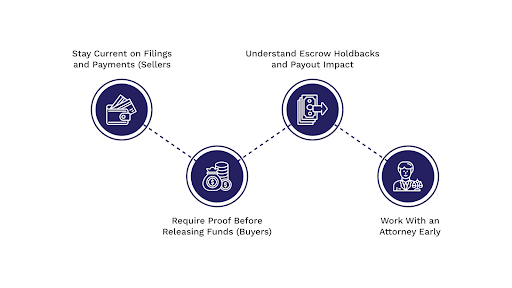
Tax clearance issues can derail a transaction if they’re not addressed early. Both buyers and sellers play a role in making sure the deal moves forward without last-minute surprises.
-
Stay Current on Filings and Payments (Sellers)
Sellers should verify that all tax returns are filed, closeout forms are submitted, and any outstanding balances are paid before escrow requests clearance certificates. Addressing these items early prevents agencies from flagging the account and delaying the release.
-
Require Proof Before Releasing Funds (Buyers)
Buyers should insist on receiving official clearance letters from every agency before releasing any money. Missing paperwork can shift liability to the buyer, making them responsible for someone else’s tax debt.
-
Understand Escrow Holdbacks and Payout Impact
Escrow officers often hold back proceeds until all agencies issue their releases. If the seller’s debts exceed the available funds, California tax agencies get paid before other creditors, which can significantly reduce the seller’s final payout. Many sellers are surprised by this priority rule.
-
Work With an Attorney Early
Engaging an attorney early helps prevent administrative details from becoming legal or financial obstacles. A knowledgeable advisor can:
- Coordinate communication between escrow, the buyer, and state agencies
- Respond quickly to audit requests.
- Track deadlines and ensure nothing slips through the cracks.
Having a professional manage the process gives both sides confidence that the deal will close smoothly and on time.
Secure Your Transaction With Expert Legal Guidance

Every sale or purchase tells a different story, but all share one thing in common: timing and compliance matter.
Dahl Law Group works with business owners across California to structure transactions that protect their interests before, during, and after closing. Our team handles business sales with the precision needed to keep deals moving and the foresight to prevent post-closing disputes.
If you’re preparing to buy or sell a business, we can help ensure every legal and tax requirement is addressed from the start.
Protect your California business transactions and the future you’re building.Contact Us Today!

Dahl Law Group
Latest posts by Dahl Law Group (see all)
- How California’s Single-Enterprise Rule Impacts Your Business - April 24, 2026