

|
Executive Summary
|
If you own several businesses or investments, you may be thinking about bringing them together under one LLC. An LLC can be useful for holding real estate, investments, or interests in other companies, and it is often part of an asset protection strategy.
You may also be reorganizing ownership before retirement or preparing to transfer interests to family members. Those plans can make sense from an organizational perspective.
However, when one of those businesses is an S Corporation, the structure requires careful planning. An LLC may legally hold corporate stock under state law but may not qualify as an S Corporation shareholder under federal tax law. Reviewing the ownership structure before transferring shares can help prevent an unintended termination of the S election.
Can an LLC Own S Corporation Stock?
Yes. An LLC can hold corporate shares under state law.
The more important question is whether that ownership preserves the corporation’s S election. Whether an LLC can be an S Corporation shareholder depends on how the IRS classifies the LLC for federal income tax purposes, not its legal form.
S Corporation Ownership Rules: Who Can Be a Shareholder?
Under Internal Revenue Code §1361, an S Corporation must satisfy specific ownership rules. Among other requirements, it generally may have no more than 100 shareholders and only one class of stock.
Eligible shareholders generally include:
- U.S. citizens and resident individuals
- Estates
- Certain trusts
- Certain qualifying tax-exempt organizations
Partnerships, corporations, and nonresident aliens generally cannot be S Corporation shareholders. Because an LLC can be taxed as a disregarded entity, a partnership, or a corporation, its eligibility depends on which classification applies.
Why Does an LLC’s Tax Classification Affect S Corporation Ownership?
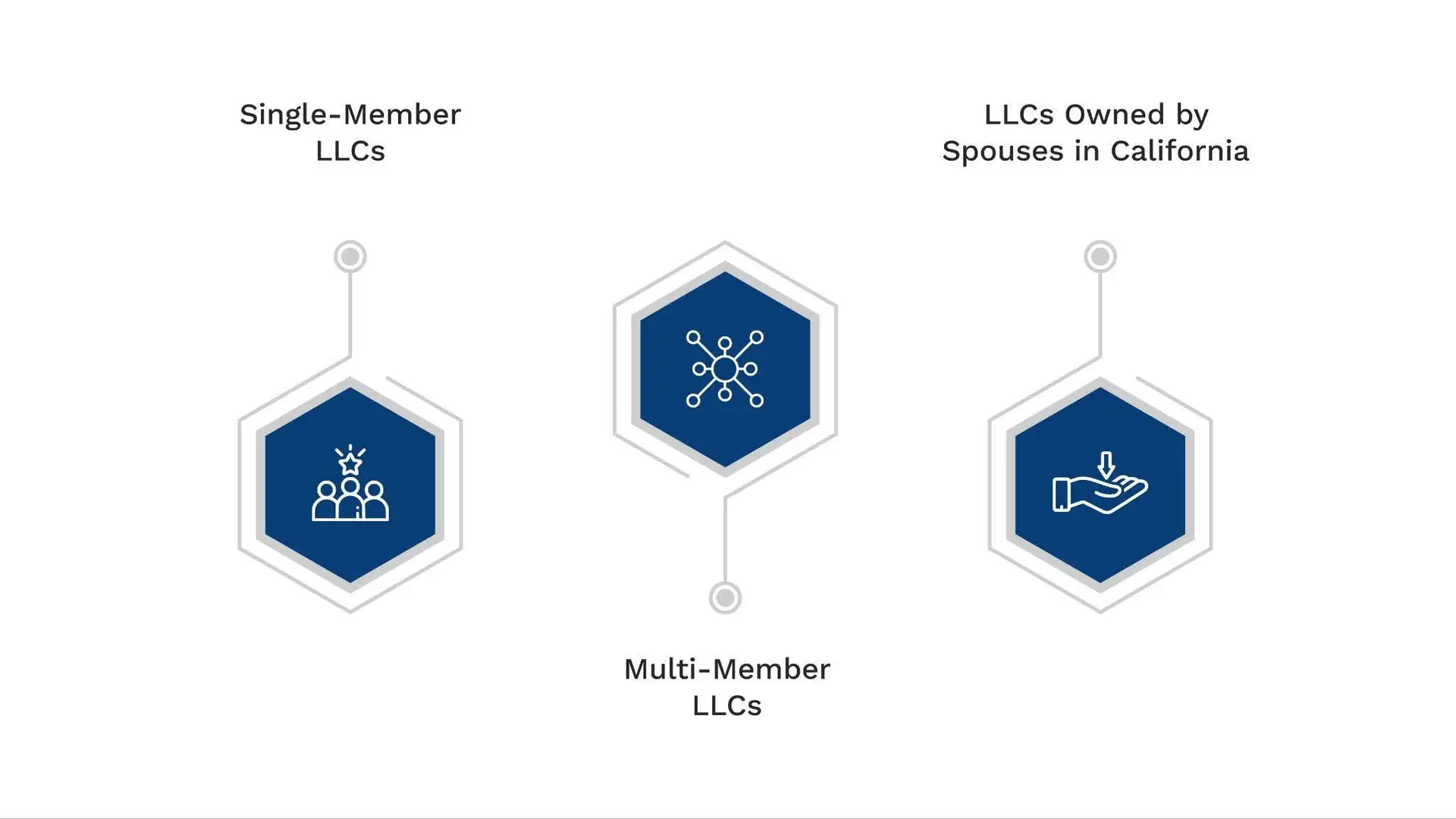
The same LLC can be treated very differently depending on how many members it has and what elections it has made. Before transferring shares, confirm how the LLC is classified. Choosing the right entity structure from the start can prevent problems later.
Single-Member LLCs
A single-member LLC is generally treated as a disregarded entity for federal income tax purposes unless it elects corporate treatment.
When an LLC is disregarded, the IRS generally looks to its owner. If that owner is an eligible S Corporation shareholder, the LLC may hold the shares without terminating the S election.
For example, an eligible individual may own a single-member LLC that holds S Corporation stock. The individual is generally treated as the shareholder for federal income tax purposes.
However, the arrangement must continue to satisfy the applicable rules. The LLC’s disregarded status for tax purposes does not eliminate its separate existence under state law.
Multi-Member LLCs
A domestic LLC with multiple members is generally classified as a partnership for federal income tax purposes unless it elects otherwise. Partnerships are not eligible S Corporation shareholders.
As a result, transferring S Corporation stock into a partnership-classified LLC can terminate the corporation’s S election. This restriction generally applies even when every LLC member would be an eligible shareholder individually.
LLCs Owned by Spouses in California
California is a community property state. Under IRS Revenue Procedure 2002-69, a qualifying entity owned entirely by spouses as community property, with no other owners, may be treated as a disregarded entity rather than a partnership for federal tax purposes when the spouses report its tax treatment consistently.
This treatment may allow the LLC to hold S Corporation shares when the applicable shareholder eligibility requirements are met. However, marriage alone does not make a jointly owned LLC eligible. California business owners should confirm community property ownership, the absence of other owners, and consistent federal tax reporting before transferring shares.
Comparing LLC Structures
|
Ownership Structure |
General Federal Treatment |
|
Disregarded Single-Member LLC With An Eligible Owner |
May qualify as an S Corporation shareholder |
|
Spouse-Owned Community Property LLC Treated As Disregarded |
May qualify, depending on tax treatment |
|
LLC Classified As A Partnership |
Generally ineligible |
|
LLC Classified As A C Corporation |
Generally ineligible |
|
LLC Classified As An S Corporation |
May own 100% of a subsidiary corporation with a valid Qualified Subchapter S Subsidiary (QSub) election; the subsidiary is then disregarded for federal tax purposes. |
What Happens if an Ineligible LLC Acquires S Corporation Shares?
An S Corporation must continue to meet federal ownership rules after its election takes effect. If an ineligible LLC acquires stock, the corporation may lose its S status and become subject to C Corporation tax treatment.
Potential consequences include:
- Corporate-level income taxation
- Taxation of shareholder distributions as dividends
- Additional compliance and reporting obligations
- A general five-year waiting period before the corporation can elect S status again without IRS consent
The consequences depend on the ownership facts and the effective date of termination.
Internal Revenue Code §1362(f) allows the IRS to provide relief for certain inadvertent terminations. However, the corporation must meet the applicable requirements, and relief should not replace a review of shareholder eligibility before a transfer.
Can an LLC Ownership Change Create Problems Later?
Yes. An arrangement that qualifies today may become ineligible after an ownership change. Suppose an eligible individual owns S Corporation shares through a disregarded single-member LLC. If another person becomes a member, the IRS may reclassify the LLC as a partnership.
That change can affect S Corporation eligibility even if the shares remain registered in the LLC’s name.
Business owners should review:
- Transfers of LLC membership interests
- Admission of additional members
- Changes in federal tax classification
- Ownership transfers following death
- Changes involving trusts or family members
The Operating Agreement and related ownership documents should address these possibilities, for example by restricting transfers that could create an ineligible S Corporation shareholder.
Can a Trust Own S Corporation Shares Instead
Certain trusts can qualify as S Corporation shareholders. These include Qualified Subchapter S Trusts (QSSTs) and Electing Small Business Trusts (ESBTs), subject to specific requirements.
|
Trust Type |
Key Features |
|
QSST |
Generally one current income beneficiary, with mandatory income distributions |
|
ESBT |
Can accommodate multiple beneficiaries, but receives different federal income tax treatment |
Trust ownership also involves election deadlines and ongoing eligibility requirements. If your succession plan involves transferring S Corporation shares into a trust, those provisions should be reviewed as part of your broader estate planning for business owners.
How Should Business Owners Structure Their Holdings?
The appropriate structure depends on the companies involved, your ownership goals, tax treatment, and succession plans. A holding company may be useful for some assets without being appropriate for S Corporation shares.
Before restructuring:
- Confirm the federal tax classification of every proposed shareholder
- Review how future ownership changes could affect eligibility
- Coordinate the structure with your strategic income tax planning
- Consider how ownership may pass to the next generation
Build an Ownership Structure That Supports Your Tax and Succession Goals

A restructuring decision should support your business goals without creating unintended tax consequences. Adding a member to an LLC or changing its tax classification can affect an S Corporation’s eligibility.
Reviewing the structure before shares move is far simpler than correcting a terminated S election afterward.
Dahl Law Group approaches these issues through its Strategic Planning Counsel for Business Owners® framework: One Team. One Strategy. Everything Aligned. This means coordinating entity structuring, business law, tax strategy, estate planning, and business succession planning into a single integrated approach.
If you are considering transferring S Corporation shares into an LLC, we can review the proposed ownership structure with you.
FAQs
Yes. A disregarded single-member LLC may own S Corporation stock when its owner is an eligible shareholder. LLCs taxed as partnerships or corporations generally cannot.
An S Corporation generally may have no more than 100 shareholders and one class of stock. Shareholders generally must be U.S. citizens and residents, estates, certain trusts, or certain tax-exempt organizations.
Generally, a partnership-classified LLC cannot hold S Corporation shares. An exception may apply to an LLC owned entirely by spouses as community property, with no other owners, when the spouses consistently report the entity as disregarded for federal tax purposes and the shareholder eligibility requirements are met.
Not as a separate S Corporation. An S Corporation may own 100% of a subsidiary corporation and elect to treat it as a QSub, which is then disregarded for federal tax purposes.
The S election may terminate, and the corporation may be taxed as a C Corporation. Relief may be available for certain inadvertent terminations.

Dahl Law Group
Latest posts by Dahl Law Group (see all)
- Can an LLC Own S Corporation Stock? What Business Owners Should Know - November 10, 2026